The Radiens products
Allego for recording, Videre for curation and analysis, and RadiensPy and the Radiens CLI for scripting. One download, free to start.
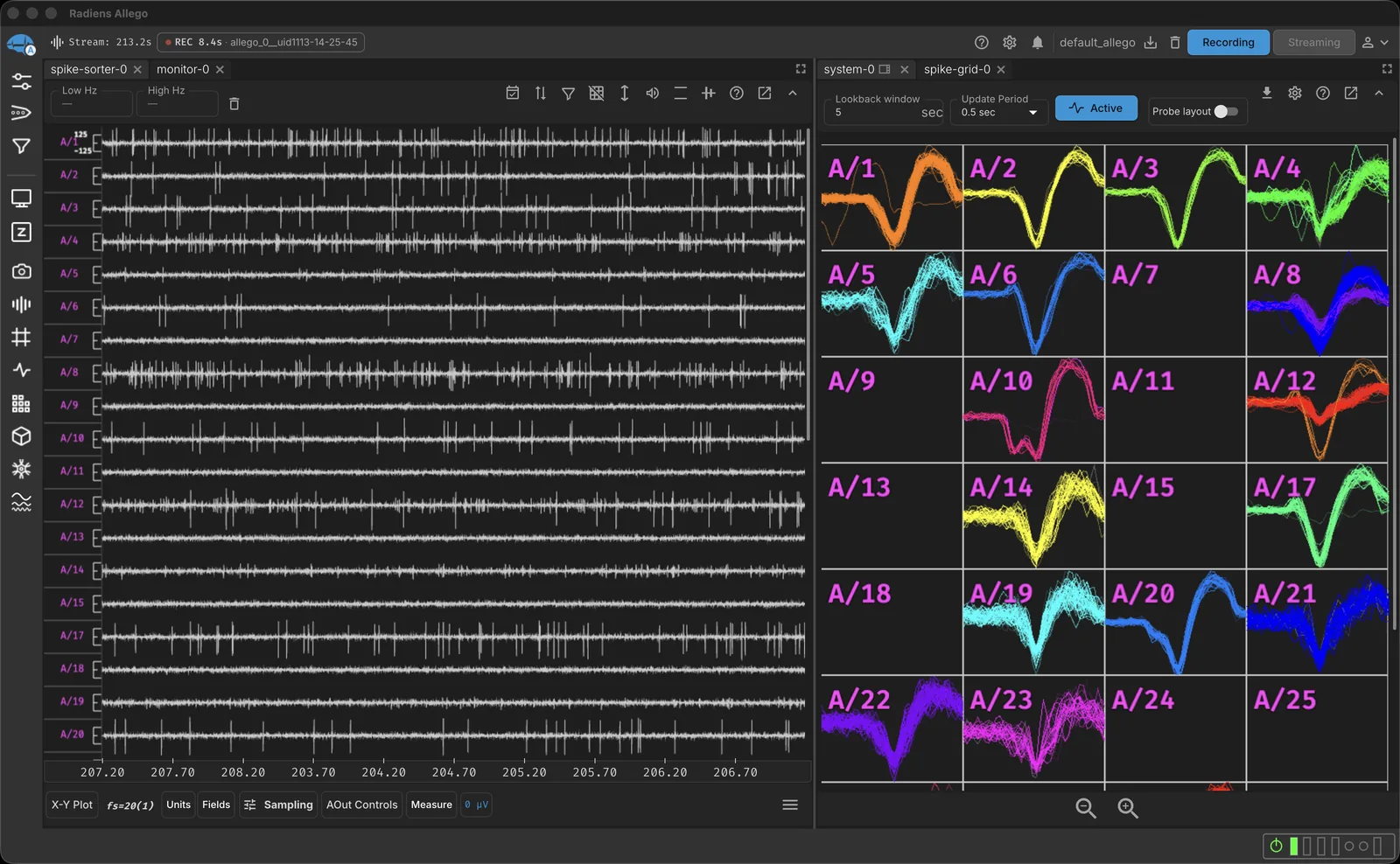
Allego: acquire
Record on NeuroNexus systems with signal quality and spike sorting live, while you can still fix a channel.
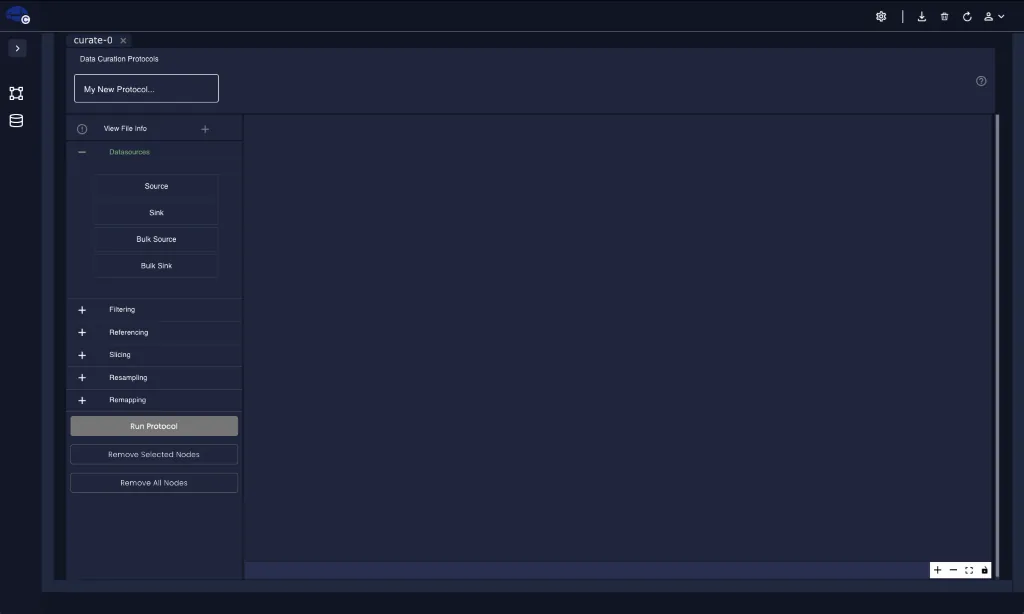
Videre: curate
Filter, reference, slice and remap a recording into a protocol, and export it to NWB, Kilosort and more.
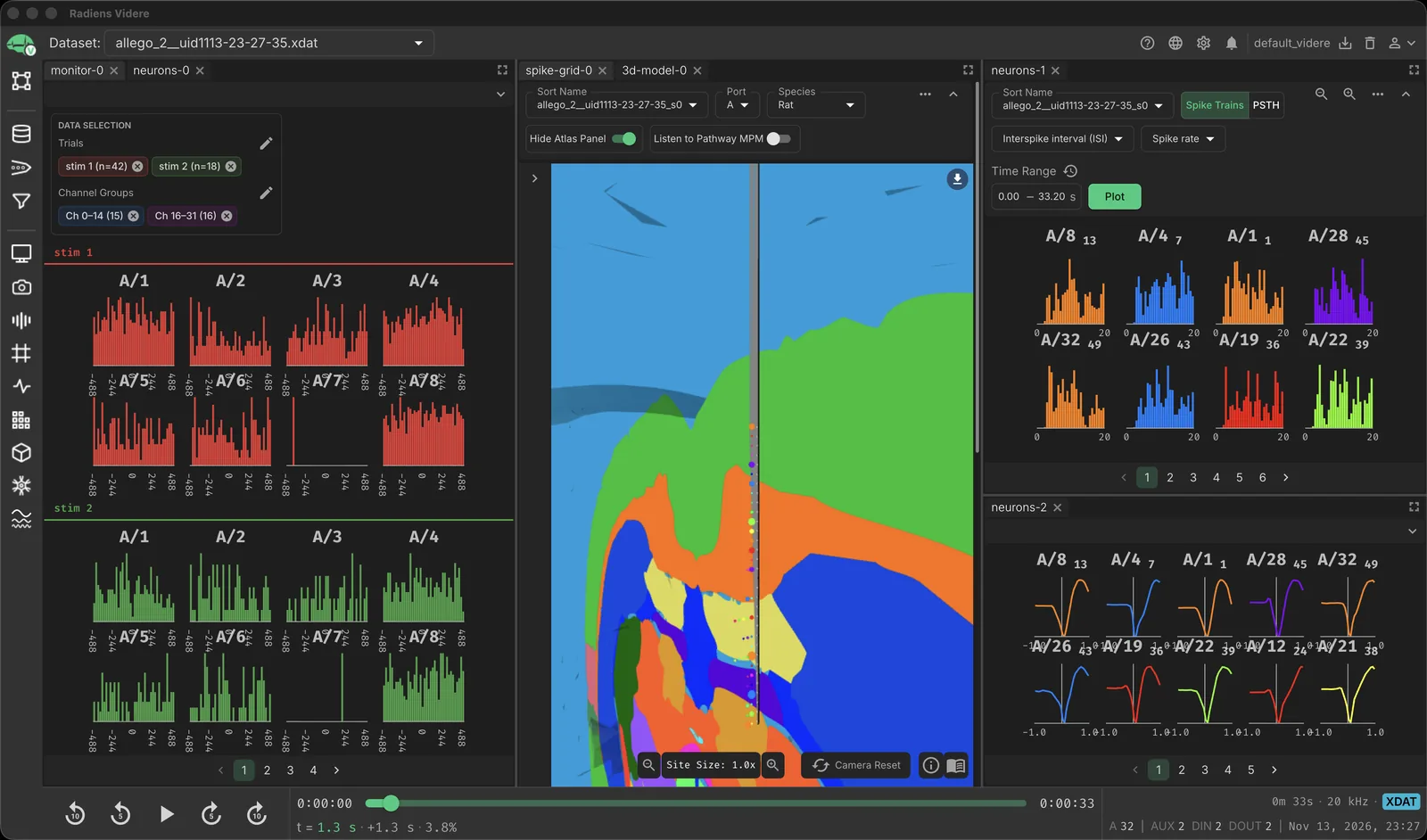
Videre: analyze
Sort saved recordings, read units on the probe and a 3D brain, and work spectra for LFP, EEG and ECoG.
%3C%2Ftspan%3E%C2%A0%3Ctspan%20fill%3D%22%23c792ea%22%3Eas%3C%2Ftspan%3E%C2%A0%3Ctspan%20fill%3D%22%23e2e8f0%22%3Evidere%3C%2Ftspan%3E%3Ctspan%20fill%3D%22%2389ddff%22%3E%3A%3C%2Ftspan%3E%3C%2Ftext%3E%3Ctext%20x%3D%2236%22%20y%3D%22256%22%3E%C2%A0%C2%A0%C2%A0%C2%A0%3Ctspan%20fill%3D%22%23c792ea%22%3Efor%3C%2Ftspan%3E%C2%A0%3Ctspan%20fill%3D%22%23e2e8f0%22%3Epath%3C%2Ftspan%3E%C2%A0%3Ctspan%20fill%3D%22%23c792ea%22%3Ein%3C%2Ftspan%3E%C2%A0%3Ctspan%20fill%3D%22%23e2e8f0%22%3Esessions%3C%2Ftspan%3E%3Ctspan%20fill%3D%22%2389ddff%22%3E%3A%3C%2Ftspan%3E%3C%2Ftext%3E%3Ctext%20x%3D%2236%22%20y%3D%22288%22%3E%C2%A0%C2%A0%C2%A0%C2%A0%C2%A0%C2%A0%C2%A0%C2%A0%3Ctspan%20fill%3D%22%23e2e8f0%22%3Erec%3C%2Ftspan%3E%C2%A0%3Ctspan%20fill%3D%22%2389ddff%22%3E%3D%3C%2Ftspan%3E%C2%A0%3Ctspan%20fill%3D%22%23e2e8f0%22%3Evidere%3C%2Ftspan%3E%3Ctspan%20fill%3D%22%2389ddff%22%3E.%3C%2Ftspan%3E%3Ctspan%20fill%3D%22%2382aaff%22%3Elink_data_file%3C%2Ftspan%3E%3Ctspan%20fill%3D%22%2389ddff%22%3E(%3C%2Ftspan%3E%3Ctspan%20fill%3D%22%23e2e8f0%22%3Epath%3C%2Ftspan%3E%3Ctspan%20fill%3D%22%2389ddff%22%3E)%3C%2Ftspan%3E%3C%2Ftext%3E%3Ctext%20x%3D%2236%22%20y%3D%22320%22%3E%C2%A0%C2%A0%C2%A0%C2%A0%C2%A0%C2%A0%C2%A0%C2%A0%3Ctspan%20fill%3D%22%23e2e8f0%22%3Eparams%3C%2Ftspan%3E%C2%A0%3Ctspan%20fill%3D%22%2389ddff%22%3E%3D%3C%2Ftspan%3E%C2%A0%3Ctspan%20fill%3D%22%2382aaff%22%3ESpikeSorterLaunchParams%3C%2Ftspan%3E%3Ctspan%20fill%3D%22%2389ddff%22%3E(%3C%2Ftspan%3E%3Ctspan%20fill%3D%22%23e2e8f0%22%3Edsource_id%3C%2Ftspan%3E%3Ctspan%20fill%3D%22%2389ddff%22%3E%3D%3C%2Ftspan%3E%3Ctspan%20fill%3D%22%23e2e8f0%22%3Erec%3C%2Ftspan%3E%3Ctspan%20fill%3D%22%2389ddff%22%3E.%3C%2Ftspan%3E%3Ctspan%20fill%3D%22%23e2e8f0%22%3Eid%3C%2Ftspan%3E%3Ctspan%20fill%3D%22%2389ddff%22%3E)%3C%2Ftspan%3E%3C%2Ftext%3E%3Ctext%20x%3D%2236%22%20y%3D%22352%22%3E%C2%A0%C2%A0%C2%A0%C2%A0%C2%A0%C2%A0%C2%A0%C2%A0%3Ctspan%20fill%3D%22%23e2e8f0%22%3Esort_id%3C%2Ftspan%3E%C2%A0%3Ctspan%20fill%3D%22%2389ddff%22%3E%3D%3C%2Ftspan%3E%C2%A0%3Ctspan%20fill%3D%22%23e2e8f0%22%3Evidere%3C%2Ftspan%3E%3Ctspan%20fill%3D%22%2389ddff%22%3E.%3C%2Ftspan%3E%3Ctspan%20fill%3D%22%2382aaff%22%3Espike_sort%3C%2Ftspan%3E%3Ctspan%20fill%3D%22%2389ddff%22%3E(%3C%2Ftspan%3E%3Ctspan%20fill%3D%22%23e2e8f0%22%3Eparams%3C%2Ftspan%3E%3Ctspan%20fill%3D%22%2389ddff%22%3E)%3C%2Ftspan%3E%3C%2Ftext%3E%3Ctext%20x%3D%2236%22%20y%3D%22384%22%3E%C2%A0%C2%A0%C2%A0%C2%A0%C2%A0%C2%A0%C2%A0%C2%A0%3Ctspan%20fill%3D%22%23e2e8f0%22%3Eunits%3C%2Ftspan%3E%C2%A0%3Ctspan%20fill%3D%22%2389ddff%22%3E%3D%3C%2Ftspan%3E%C2%A0%3Ctspan%20fill%3D%22%23e2e8f0%22%3Evidere%3C%2Ftspan%3E%3Ctspan%20fill%3D%22%2389ddff%22%3E.%3C%2Ftspan%3E%3Ctspan%20fill%3D%22%2382aaff%22%3Eget_units%3C%2Ftspan%3E%3Ctspan%20fill%3D%22%2389ddff%22%3E(%3C%2Ftspan%3E%3Ctspan%20fill%3D%22%23e2e8f0%22%3Erec%3C%2Ftspan%3E%3Ctspan%20fill%3D%22%2389ddff%22%3E%2C%3C%2Ftspan%3E%C2%A0%3Ctspan%20fill%3D%22%23e2e8f0%22%3Espikes_id%3C%2Ftspan%3E%3Ctspan%20fill%3D%22%2389ddff%22%3E%3D%3C%2Ftspan%3E%3Ctspan%20fill%3D%22%23e2e8f0%22%3Esort_id%3C%2Ftspan%3E%3Ctspan%20fill%3D%22%2389ddff%22%3E)%3C%2Ftspan%3E%3C%2Ftext%3E%3Ctext%20x%3D%2236%22%20y%3D%22416%22%3E%C2%A0%C2%A0%C2%A0%C2%A0%C2%A0%C2%A0%C2%A0%C2%A0%3Ctspan%20fill%3D%22%2382aaff%22%3Eprint%3C%2Ftspan%3E%3Ctspan%20fill%3D%22%2389ddff%22%3E(%3C%2Ftspan%3E%3Ctspan%20fill%3D%22%23e2e8f0%22%3Epath%3C%2Ftspan%3E%3Ctspan%20fill%3D%22%2389ddff%22%3E%2C%3C%2Ftspan%3E%C2%A0%3Ctspan%20fill%3D%22%2382aaff%22%3Elen%3C%2Ftspan%3E%3Ctspan%20fill%3D%22%2389ddff%22%3E(%3C%2Ftspan%3E%3Ctspan%20fill%3D%22%23e2e8f0%22%3Eunits%3C%2Ftspan%3E%3Ctspan%20fill%3D%22%2389ddff%22%3E)%3C%2Ftspan%3E%3Ctspan%20fill%3D%22%2389ddff%22%3E%2C%3C%2Ftspan%3E%C2%A0%3Ctspan%20fill%3D%22%23c3e88d%22%3E%22units%22%3C%2Ftspan%3E%3Ctspan%20fill%3D%22%2389ddff%22%3E)%3C%2Ftspan%3E%3C%2Ftext%3E%3C%2Fsvg%3E)
RadiensPy and the CLI: script
Drive the same engine as the apps from Python or the command line, free at every tier.
Radiens products — FAQ
Is there a free version of Radiens?
Yes — Radiens Standard is free and permanent, and it produces publication-grade results, not a trial or demo. The paid Pro tier adds professional analysis, curation, and the scale a working lab runs on.
What is the Radiens electrophysiology platform?
Radiens is NeuroNexus's software platform for electrophysiology — it acquires, analyzes, and curates spike, LFP, EEG, and ECoG data from most major systems in one place, and your data stays on your own machine.
What are the parts of Radiens?
Radiens includes Allego for recording, Videre for analysis, and the free RadiensPy Python packages and command-line tool. Radiens Web, for following your recordings from a browser, is in development.
Do I need to know how to program to use Radiens?
No. Radiens works out of the box through its apps — a first-year student can record and analyze without writing any code. When you want to automate or scale up, the same capabilities are available in Python and from the command line, so the program grows with you.
Does Radiens work with my current tools and recording system?
Yes. Radiens reads data from most systems — Intan, Open Ephys, Blackrock, TDT, and Plexon — with no conversion step, reads and writes the open NWB standard, and works alongside open-source tools like SpikeInterface and MNE.