Electrophysiology software, from recording to result
Record in Allego, curate and analyze in Videre, and script it from Python: spike, LFP, EEG and ECoG data in one program, on your own machine.
One program, on your own data
Radiens is NeuroNexus software for electrophysiology: it records, curates and analyzes spike, LFP, EEG and ECoG data in one program, reads most recording systems, and keeps your data on your own storage. NeuroNexus has built probes, instruments and software for twenty years, used in 1,000+ labs and cited in 5,000+ publications.
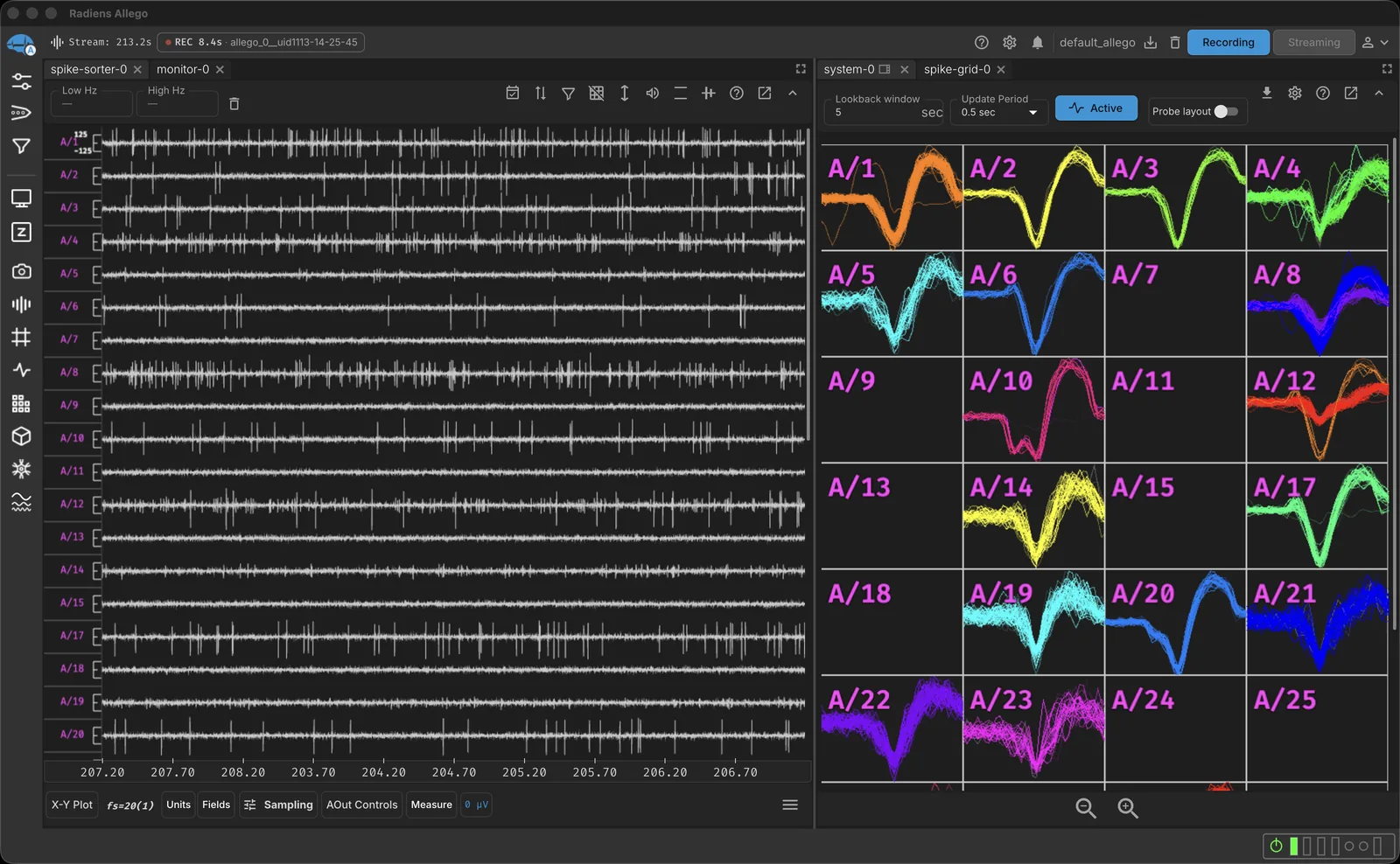
Record in Allego and watch signal quality live
Allego runs NeuroNexus acquisition systems and keeps signal quality on every site in view while you record, so a failing channel shows up while you can still fix it.
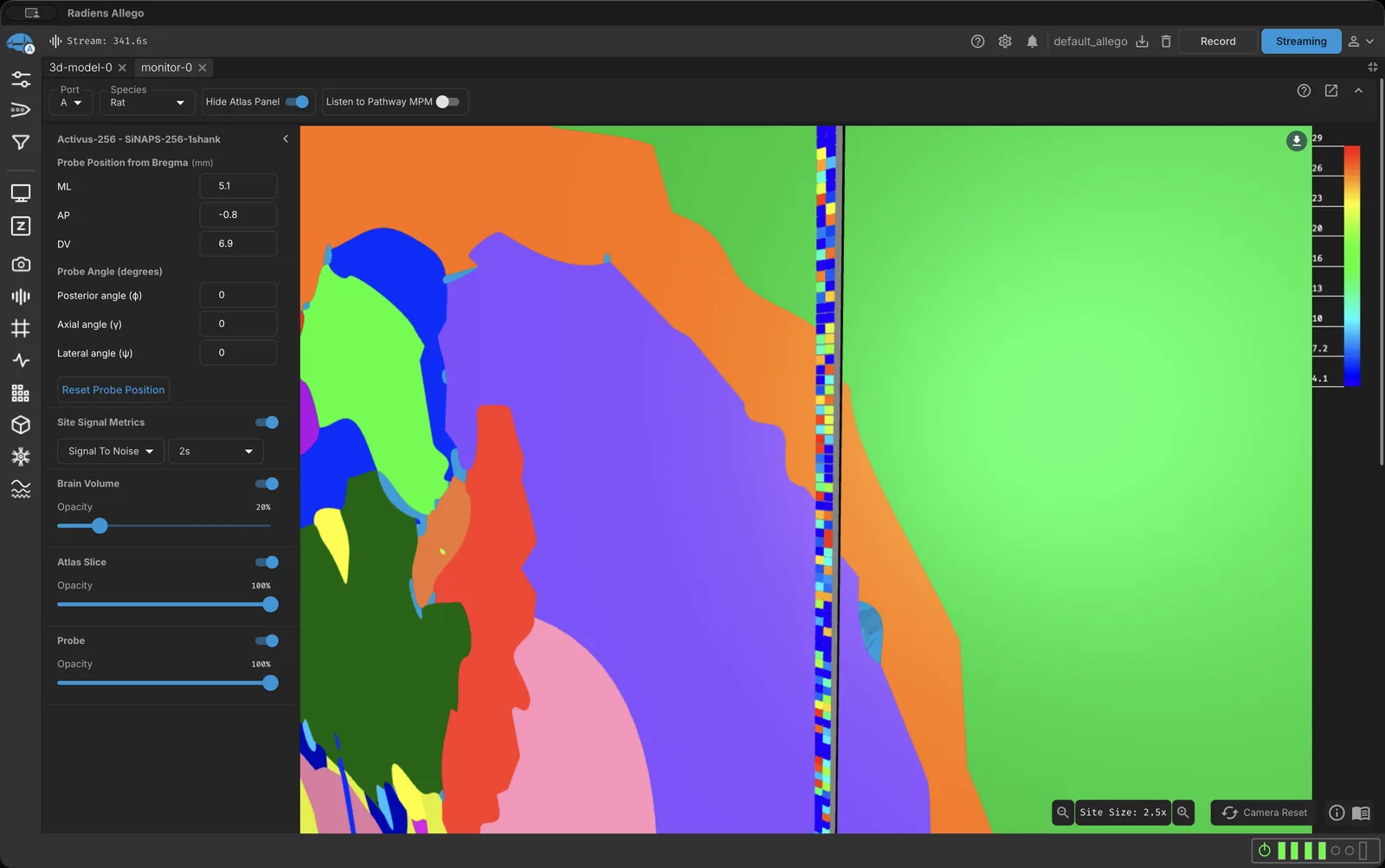
Live signal metrics
Noise and signal-to-noise on every site of the probe.
Online spike sorting
Units build during the session, in free Standard.
Your hardware
NeuroNexus acquisition systems and SiNAPS probes.
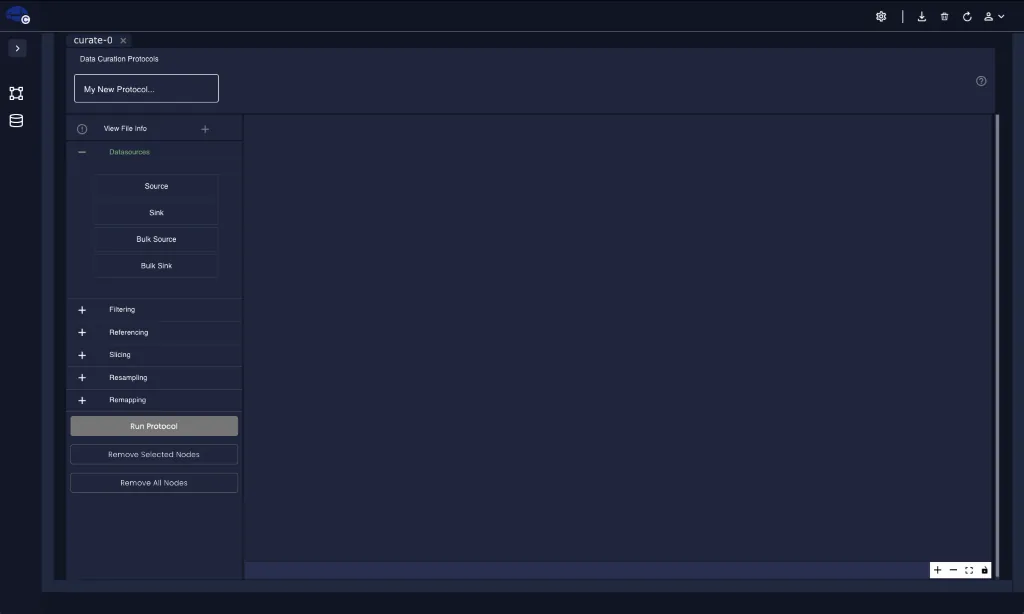
Clean a recording once, then export it anywhere
In Videre's Curate tab, chain filtering, referencing, slicing and remapping into one protocol, and export the result to the format your next tool reads.
Most systems in
Intan, Open Ephys, Blackrock, TDT and Plexon, with no conversion step.
Open formats out
NWB, Kilosort, CSV, HDF5 and NeuroExplorer.
Saved protocols
Save the chain once and run it on every session (Pro).
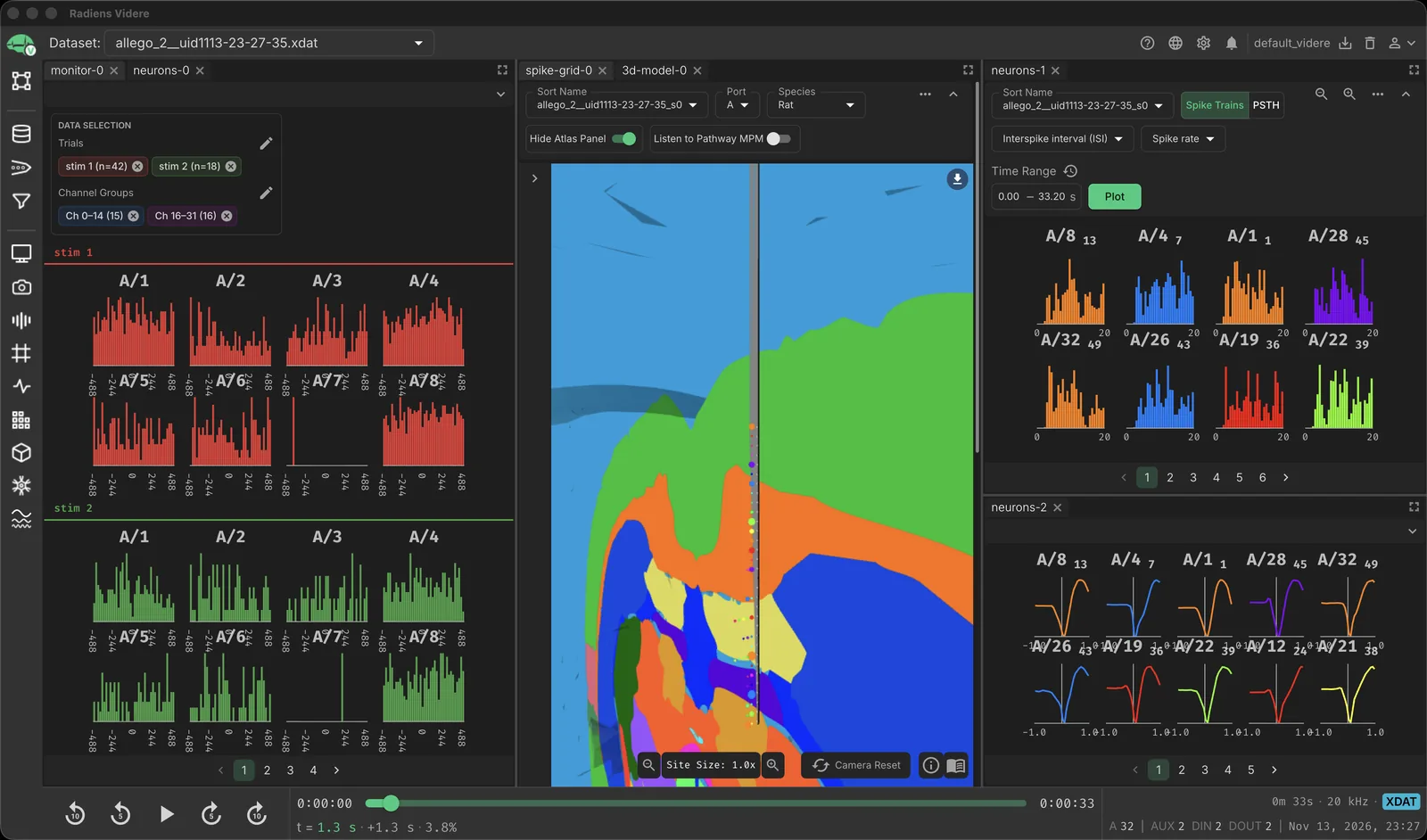
Sort, then read each unit on the probe and the brain
Videre sorts saved recordings and shows each unit's waveform, interspike intervals and PSTHs beside the probe in a 3D brain atlas. Spectra cover LFP, EEG and ECoG.
Offline spike sorting
Sort any saved recording, with export to Phy.
Unit views
PSTHs, interspike intervals and average waveforms.
Spectra
Spectrum and spectrogram by channel group.
Run the same analysis on every session from Python
RadiensPy and the Radiens CLI drive the same engine as the apps, free at every tier. Work a routine out in Videre, then run it across sessions in a few readable lines.
%3C%2Ftspan%3E%C2%A0%3Ctspan%20fill%3D%22%23c792ea%22%3Eas%3C%2Ftspan%3E%C2%A0%3Ctspan%20fill%3D%22%23e2e8f0%22%3Evidere%3C%2Ftspan%3E%3Ctspan%20fill%3D%22%2389ddff%22%3E%3A%3C%2Ftspan%3E%3C%2Ftext%3E%3Ctext%20x%3D%2236%22%20y%3D%22256%22%3E%C2%A0%C2%A0%C2%A0%C2%A0%3Ctspan%20fill%3D%22%23c792ea%22%3Efor%3C%2Ftspan%3E%C2%A0%3Ctspan%20fill%3D%22%23e2e8f0%22%3Epath%3C%2Ftspan%3E%C2%A0%3Ctspan%20fill%3D%22%23c792ea%22%3Ein%3C%2Ftspan%3E%C2%A0%3Ctspan%20fill%3D%22%23e2e8f0%22%3Esessions%3C%2Ftspan%3E%3Ctspan%20fill%3D%22%2389ddff%22%3E%3A%3C%2Ftspan%3E%3C%2Ftext%3E%3Ctext%20x%3D%2236%22%20y%3D%22288%22%3E%C2%A0%C2%A0%C2%A0%C2%A0%C2%A0%C2%A0%C2%A0%C2%A0%3Ctspan%20fill%3D%22%23e2e8f0%22%3Erec%3C%2Ftspan%3E%C2%A0%3Ctspan%20fill%3D%22%2389ddff%22%3E%3D%3C%2Ftspan%3E%C2%A0%3Ctspan%20fill%3D%22%23e2e8f0%22%3Evidere%3C%2Ftspan%3E%3Ctspan%20fill%3D%22%2389ddff%22%3E.%3C%2Ftspan%3E%3Ctspan%20fill%3D%22%2382aaff%22%3Elink_data_file%3C%2Ftspan%3E%3Ctspan%20fill%3D%22%2389ddff%22%3E(%3C%2Ftspan%3E%3Ctspan%20fill%3D%22%23e2e8f0%22%3Epath%3C%2Ftspan%3E%3Ctspan%20fill%3D%22%2389ddff%22%3E)%3C%2Ftspan%3E%3C%2Ftext%3E%3Ctext%20x%3D%2236%22%20y%3D%22320%22%3E%C2%A0%C2%A0%C2%A0%C2%A0%C2%A0%C2%A0%C2%A0%C2%A0%3Ctspan%20fill%3D%22%23e2e8f0%22%3Eparams%3C%2Ftspan%3E%C2%A0%3Ctspan%20fill%3D%22%2389ddff%22%3E%3D%3C%2Ftspan%3E%C2%A0%3Ctspan%20fill%3D%22%2382aaff%22%3ESpikeSorterLaunchParams%3C%2Ftspan%3E%3Ctspan%20fill%3D%22%2389ddff%22%3E(%3C%2Ftspan%3E%3Ctspan%20fill%3D%22%23e2e8f0%22%3Edsource_id%3C%2Ftspan%3E%3Ctspan%20fill%3D%22%2389ddff%22%3E%3D%3C%2Ftspan%3E%3Ctspan%20fill%3D%22%23e2e8f0%22%3Erec%3C%2Ftspan%3E%3Ctspan%20fill%3D%22%2389ddff%22%3E.%3C%2Ftspan%3E%3Ctspan%20fill%3D%22%23e2e8f0%22%3Eid%3C%2Ftspan%3E%3Ctspan%20fill%3D%22%2389ddff%22%3E)%3C%2Ftspan%3E%3C%2Ftext%3E%3Ctext%20x%3D%2236%22%20y%3D%22352%22%3E%C2%A0%C2%A0%C2%A0%C2%A0%C2%A0%C2%A0%C2%A0%C2%A0%3Ctspan%20fill%3D%22%23e2e8f0%22%3Esort_id%3C%2Ftspan%3E%C2%A0%3Ctspan%20fill%3D%22%2389ddff%22%3E%3D%3C%2Ftspan%3E%C2%A0%3Ctspan%20fill%3D%22%23e2e8f0%22%3Evidere%3C%2Ftspan%3E%3Ctspan%20fill%3D%22%2389ddff%22%3E.%3C%2Ftspan%3E%3Ctspan%20fill%3D%22%2382aaff%22%3Espike_sort%3C%2Ftspan%3E%3Ctspan%20fill%3D%22%2389ddff%22%3E(%3C%2Ftspan%3E%3Ctspan%20fill%3D%22%23e2e8f0%22%3Eparams%3C%2Ftspan%3E%3Ctspan%20fill%3D%22%2389ddff%22%3E)%3C%2Ftspan%3E%3C%2Ftext%3E%3Ctext%20x%3D%2236%22%20y%3D%22384%22%3E%C2%A0%C2%A0%C2%A0%C2%A0%C2%A0%C2%A0%C2%A0%C2%A0%3Ctspan%20fill%3D%22%23e2e8f0%22%3Eunits%3C%2Ftspan%3E%C2%A0%3Ctspan%20fill%3D%22%2389ddff%22%3E%3D%3C%2Ftspan%3E%C2%A0%3Ctspan%20fill%3D%22%23e2e8f0%22%3Evidere%3C%2Ftspan%3E%3Ctspan%20fill%3D%22%2389ddff%22%3E.%3C%2Ftspan%3E%3Ctspan%20fill%3D%22%2382aaff%22%3Eget_units%3C%2Ftspan%3E%3Ctspan%20fill%3D%22%2389ddff%22%3E(%3C%2Ftspan%3E%3Ctspan%20fill%3D%22%23e2e8f0%22%3Erec%3C%2Ftspan%3E%3Ctspan%20fill%3D%22%2389ddff%22%3E%2C%3C%2Ftspan%3E%C2%A0%3Ctspan%20fill%3D%22%23e2e8f0%22%3Espikes_id%3C%2Ftspan%3E%3Ctspan%20fill%3D%22%2389ddff%22%3E%3D%3C%2Ftspan%3E%3Ctspan%20fill%3D%22%23e2e8f0%22%3Esort_id%3C%2Ftspan%3E%3Ctspan%20fill%3D%22%2389ddff%22%3E)%3C%2Ftspan%3E%3C%2Ftext%3E%3Ctext%20x%3D%2236%22%20y%3D%22416%22%3E%C2%A0%C2%A0%C2%A0%C2%A0%C2%A0%C2%A0%C2%A0%C2%A0%3Ctspan%20fill%3D%22%2382aaff%22%3Eprint%3C%2Ftspan%3E%3Ctspan%20fill%3D%22%2389ddff%22%3E(%3C%2Ftspan%3E%3Ctspan%20fill%3D%22%23e2e8f0%22%3Epath%3C%2Ftspan%3E%3Ctspan%20fill%3D%22%2389ddff%22%3E%2C%3C%2Ftspan%3E%C2%A0%3Ctspan%20fill%3D%22%2382aaff%22%3Elen%3C%2Ftspan%3E%3Ctspan%20fill%3D%22%2389ddff%22%3E(%3C%2Ftspan%3E%3Ctspan%20fill%3D%22%23e2e8f0%22%3Eunits%3C%2Ftspan%3E%3Ctspan%20fill%3D%22%2389ddff%22%3E)%3C%2Ftspan%3E%3Ctspan%20fill%3D%22%2389ddff%22%3E%2C%3C%2Ftspan%3E%C2%A0%3Ctspan%20fill%3D%22%23c3e88d%22%3E%22units%22%3C%2Ftspan%3E%3Ctspan%20fill%3D%22%2389ddff%22%3E)%3C%2Ftspan%3E%3C%2Ftext%3E%3C%2Fsvg%3E)
Used in research institutions


“The Radiens Software is very user friendly for sure, and that’s a good thing. I like the online features of spike sorting and being able to see each neuron independently.” — Post-doc, Salk Institute
Start from the problem in front of you
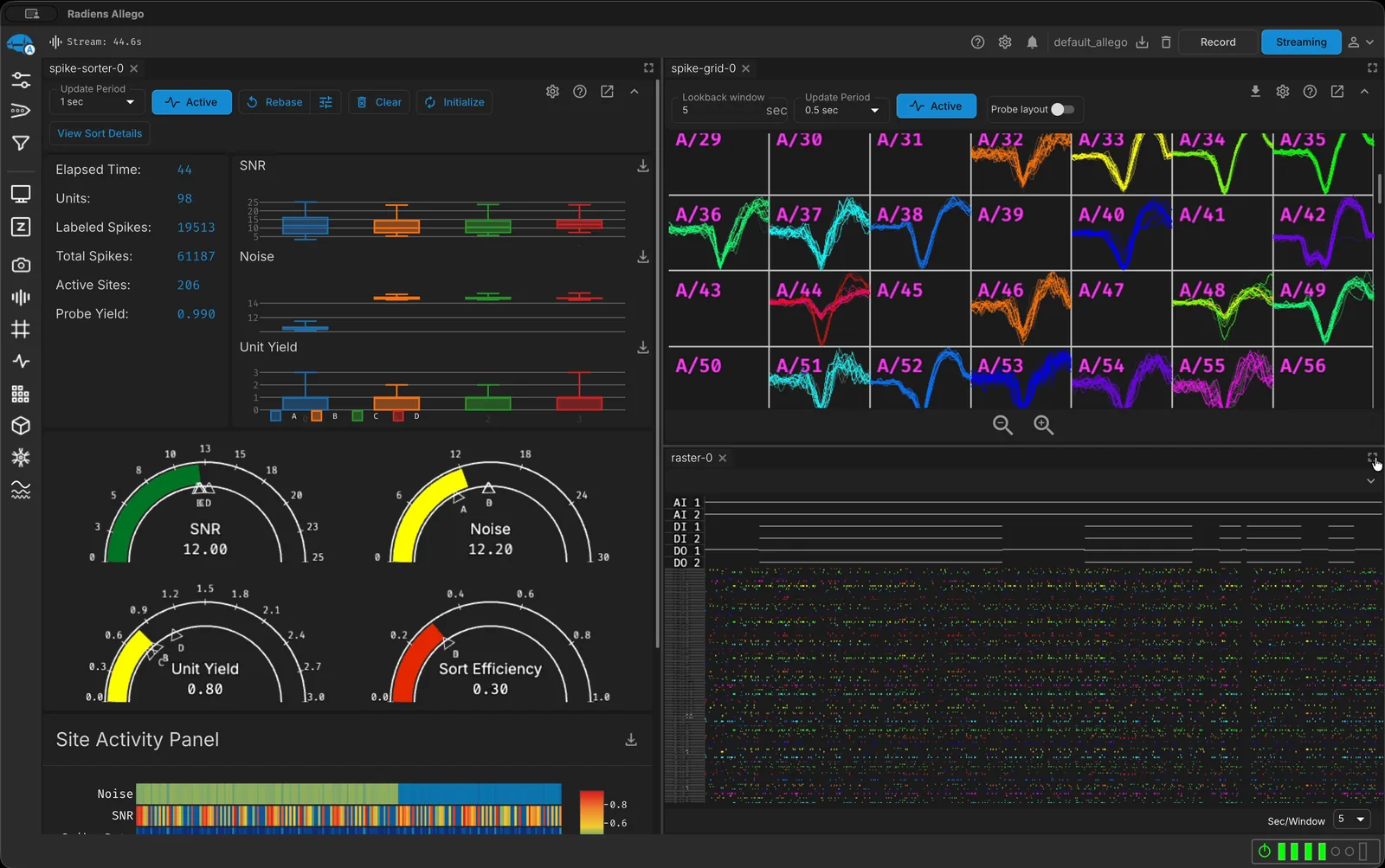
Spike sorting
Online in Allego while you record, offline in Videre on saved recordings.

Follow Live Recording
Follow an Intan, Open Ephys, Blackrock or TDT recording as it’s written.

Signal metrics
Noise, signal-to-noise and event rate on every site of the probe, live and after.
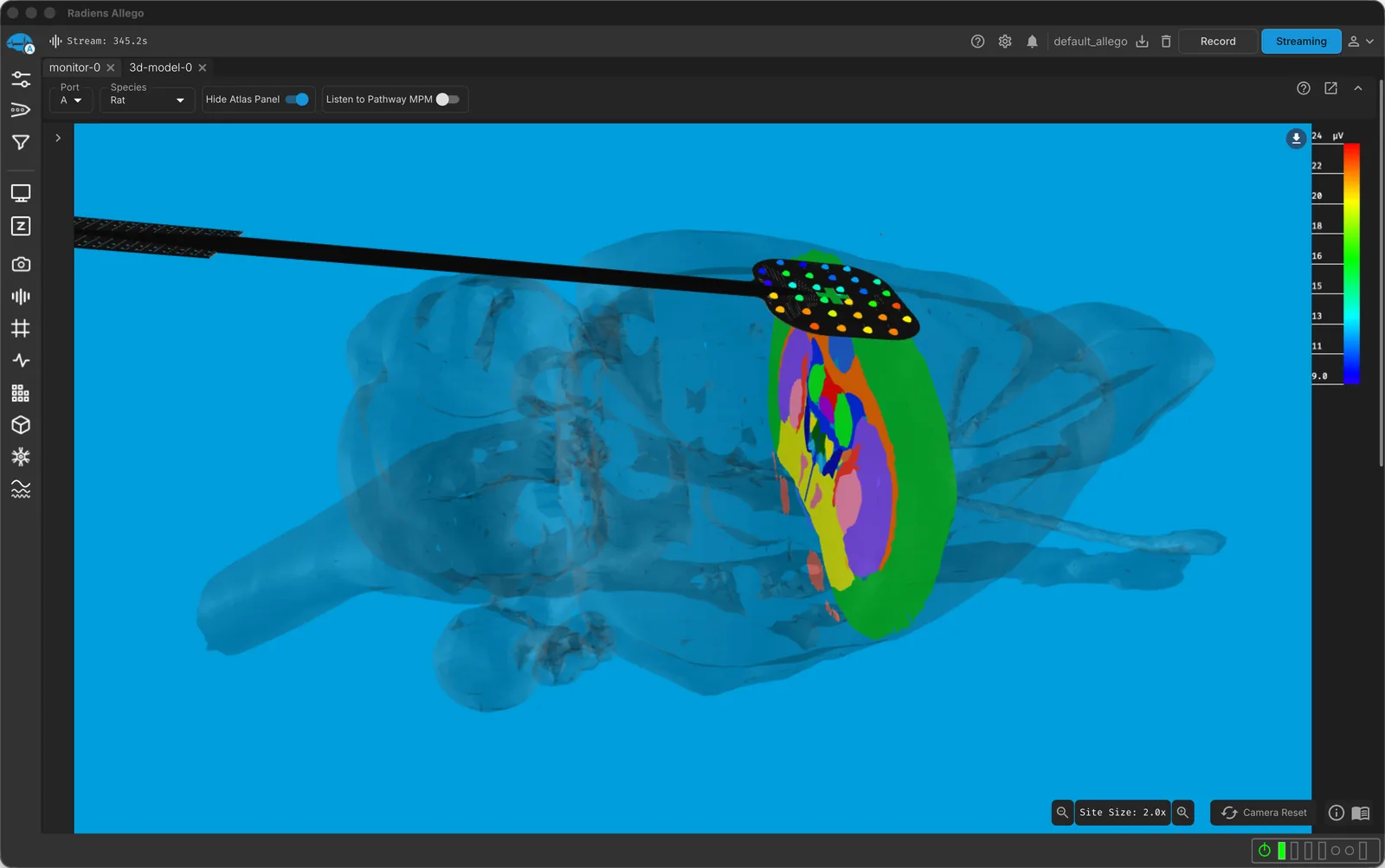
ECoG and EEG
NeuroNexus grids with their headstage wiring built in, drawn on a 3D brain.
Radiens — FAQ
Is there a free version of Radiens?
Yes — Radiens Standard is free and permanent, and it produces publication-grade results, not a trial or demo. The paid Pro tier adds professional analysis, curation, and the scale a working lab runs on.
What is the Radiens electrophysiology platform?
Radiens is NeuroNexus's software platform for electrophysiology — it acquires, analyzes, and curates spike, LFP, EEG, and ECoG data from most major systems in one place, and your data stays on your own machine.
Which company makes Radiens?
Radiens is made by NeuroNexus, which has been building the full electrophysiology stack — probes, instruments, and software — since 2004, used in over 1,000 labs and cited in more than 5,000 publications. Radiens brings that track record to the analysis software and is already in use at 100+ labs.
Is Radiens only for NeuroNexus probes and data acquisition systems?
No — Radiens reads data from most major electrophysiology systems (Intan, Open Ephys, Blackrock, TDT, Plexon, and NWB), not just NeuroNexus, so it fits your lab regardless of the hardware you record with.
Does Radiens work with open source software and files?
Yes — Radiens reads NWB, Open Ephys, and most common file formats natively with no conversion step, and interoperates with the open-source ecosystem through the free RadiensPy Python packages.
Can Radiens be used with large datasets?
Yes — Radiens handles large-scale electrophysiology, working with high-channel-count recordings (1,024+ channels) and study-scale, multi-session datasets. The heaviest jobs run on your workstation today, with on-demand cluster compute in development for Radiens Compute.
Record your next session in Radiens — free to start
Standard is free and permanent. Pro adds professional analysis, curation and the scale a working lab runs on.